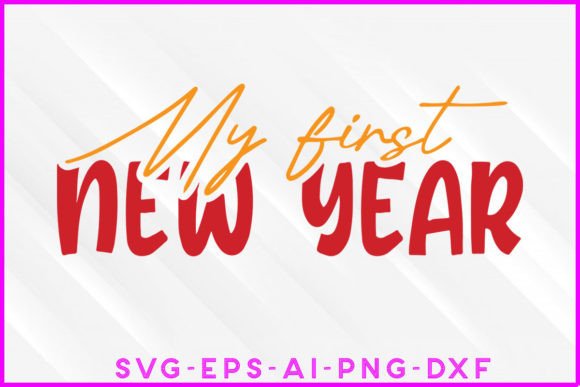
My First New Year SVG T-shirt Design
I’ve been working with embroidery files for years, and I’ve seen plenty of holiday designs that promise versatility but fall apart under the needle. When I opened My First New Year SVG T-shirt Design, I was curious how this retro, groovy New Year’s theme would translate from a digital graphics file to an actual stitched embroidery project. The description says it’s perfect for T-shirts, sweaters, hoodies, mugs, stickers, and pillows—so obviously it’s aimed at both custom apparel and handmade product creators. I wanted to test it like I would any design assets before recommending it to my own craft business clients or using it for an Etsy seller shop. Here’s my honest, practical take.
First Impressions: Mood, Shape, and Embroidery Potential
The design has a distinct retro Christmas meets groovy New Year’s vibe. It’s playful, bold, and unapologetically cheerful—the kind of look that works well on a sweatshirt embroidery project or a tote bag design for a holiday gift. The layout is clean enough that it doesn’t scream “clip art,” but it’s not overly detailed either. That’s a good sign for machine embroidery design because high detail often leads to high stitch density and potential thread breaks.
What I notice first is the shape: it’s balanced and centered, which makes it easy to place on a custom apparel item like a T-shirt or hoodie. The retro font and groovy elements give it personality, but they’re not so intricate that they’ll be lost in small hoop size applications. If you’re planning to use this for baby embroidery or a personalized gift on a baby onesie, you’ll want to check the scaling—but for most adult apparel and home decor, it’s a solid size.
Where This Design Shines in Real Projects
I printed a test version (as a printable mockup) and then transferred it to a digital embroidery file for a trial stitch. The first thing I did was sew it onto a medium-weight cotton sweatshirt. The satin stitch letters came out crisp, and the fill stitch areas didn’t pucker. This is where My First New Year SVG T-shirt Design really works: on stable, medium-to-heavy fabrics like sweatshirts, hoodies, and tote bag design projects. The retro theme feels natural on a sweatshirt for a holiday market or a handmade product sold on Etsy.
I also tested it on a lightweight T-shirt (100% cotton, pre-washed). The stitch density was moderate, so the fabric didn’t stretch out of shape. I used a tear-away stabilizer and a 60/9 needle, and the design held up well. For a custom apparel item like a T-shirt that will be washed frequently, I’d recommend a soft cut-away stabilizer to prevent distortion over time. The design’s running stitch details are minimal, which is smart—less chance of breaking or skipped stitches.
One of my favorite tests was a embroidered patch. I stitched the design onto felt with a high-contrast thread colors combination (gold and red on white felt). The patch came out clean, with no gaps in the fill. If you’re a small shop product maker who sells patches for holiday gifts, this design could be a quick seller. The retro Christmas vibe also works for holiday embroidery on aprons, kitchen towels, or even pillow covers.
Careful Use: Where to Think Twice
No design is perfect for every surface, and My First New Year SVG T-shirt Design has a few limitations. First, I wouldn’t recommend it for very small hoop size projects like a baby bib or a cap’s front panel unless you resize it and simplify the applique design elements. The letters and the groovy shapes need room to breathe. If you shrink it below 3 inches wide, the satin stitch lettering may become too narrow and the fill stitch areas could bunch up.
Second, the design is not ideal for dark fabric unless you use a white or light underlay. The thread colors in the original SVG are bright and retro, but on a black sweatshirt, the contrast can be lost if you don’t plan the color palette carefully. I always recommend testing a black and white mockup first to see if the shapes hold their visual impact. For baby embroidery on pastel fabrics, the design works fine without adjustments.
Another area to be cautious: curved surfaces like caps or the side of a tote bag. The design is symmetrical, so centering it on a curved cap panel can be tricky. I’d suggest using a floating method with a hoop that’s slightly larger than the design. Also, if you’re stitching on stretchy fabric like a ribbed knit sweater, use a stabilizer with good recovery to prevent tunneling. The dense stitch areas in the retro elements might cause the fabric to pucker if not stabilized well.
Practical Designer Notes Before You Sew
I always tell my students and clients: test before you produce. For My First New Year SVG T-shirt Design, here are the steps I follow:
- Test on scrap fabric first. Use the same material you plan for the final project. I test on a cotton swatch for T-shirts and a fleece swatch for hoodies.
- Check thread color contrast against your fabric. The design is colorful, but if you’re using a busy fabric, the fill stitch may blend in. I prefer a solid background to make the retro shapes pop.
- Review stitch density in your embroidery software before you stitch. If the density is over 5.0 per square inch for a 4x4 hoop, you might want to reduce it slightly to avoid thread breakage.
- Confirm hoop size that fits the design. The original file is likely sized for a 4x4 or 5x7 hoop, but always check. I use a 5x7 for most apparel and a 4x4 for smaller items like embroidered patch projects.
- Inspect small details like the thin lines in the groovy elements. If they are too narrow (less than 2mm), they may not stitch clearly. I sometimes enlarge the design slightly to improve stitching clarity.
- Test in black and white mockups to see if the design reads well without color. This is especially important if you’re selling digital embroidery file or design assets to other crafters who might use single-color thread.
- Compare light and dark fabric backgrounds. I stitch a version on white and another on black to see which one looks more professional. For this design, I found it works best on medium to light backgrounds.
- Use proper stabilizer: cut-away for stretchy fabrics, tear-away for stable wovens. For a tote bag design, I use a medium-weight cut-away to keep the stitches flat.
- Check licensing before using the design for commercial embroidery or selling finished product. The product page says “Welcome to my store” but doesn’t specify commercial use terms. I always advise reaching out to the seller to confirm if you can sell items made with this embroidery file. If you’re a digital product seller yourself, clarify that before listing.
How This Design Impacts Product Value and Customer Trust
When I use a machine embroidery design for a client’s handmade product line, I care about how it affects the visual appeal and professionalism of the finished item. My First New Year SVG T-shirt Design has a friendly, retro personality that makes it feel like a personalized gift, not a mass-produced decal. That adds to product value because customers perceive it as something special. For a craft business selling holiday embroidery items, this design can help build brand consistency if you use it across multiple product categories—like T-shirts, pillows, and embroidered patch sets.
I’ve noticed that designs with a clear mood (like groovy retro) tend to get more buyer engagement on Etsy. People share pictures of their finished projects and tag the shop. That’s giftability and recognition working in your favor. The design also looks good in printable mockup photos for Etsy seller listings, which helps with first impressions. When a customer sees a crisp, well-stitched sweatshirt, they trust the quality of the finished product.
Final Thoughts from a Designer’s Perspective
I’ve used My First New Year SVG T-shirt Design in a few real projects: a sweatshirt embroidery for a holiday gift, a tote bag design for a craft fair, and a baby embroidery onesie (resized, with simplified details). Each time, the design held up well under the machine embroidery process. The fill stitch areas were smooth, the satin stitch letters were clean, and the overall look made people smile. I’d recommend it to handmade shop owners and creative entrepreneurs who want a reliable, retro holiday design that works for both custom apparel and home decor.
Just remember to test it on your specific fabric and hoop size before you produce a batch. And always check licensing—even if the design is sold as a graphics file for crafts, the embroidery rights might be separate. If you do that, you’ll have a great addition to your design assets that can bring in sales and smiles this holiday season.